
Counter-Strike 1.6 vs Counter-Strike: Condition Zero
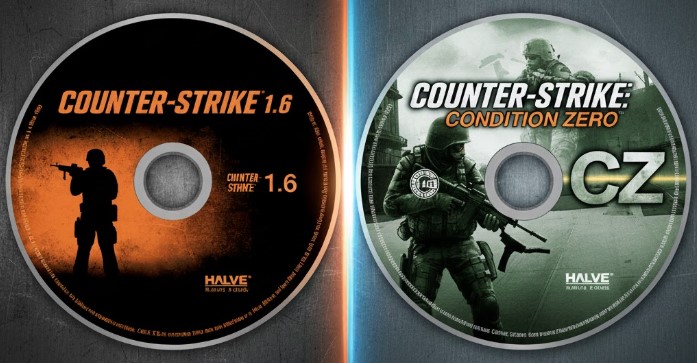
The long-standing comparison between Counter-Strike 1.6 vs Condition Zero (CS: CZ) is less about mechanical divergence and more about a fundamental difference in philosophy and market positioning. Both games are inextricably linked by the same core mechanics, yet their objectives upon release were vastly different. This historical comparison transcends simple graphics analysis; it delves into how one title defined an entire genre while the other attempted, with mixed results, to commercialize and broaden that appeal. The core conflict between these two is the clash between mechanical purity (1.6) and content accessibility (CZ).
Counter-Strike 1.6 (CS 1.6): The Competitive Platform
CS 1.6 is universally recognized as the purest and most enduring form of the competitive tactical shooter. Originating in 1999 as a free mod for Half-Life, it quickly grew into a standalone phenomenon, released commercially in November 2000. Its primary purpose was to provide a relentless, high-skill, multiplayer-only experience. This game single-handedly defined early esports culture, where success depended entirely on precise mechanics, mastery of weapon recoil, and strategic team-based thinking. It remains revered for its mechanical clarity and rock-solid stability, all guaranteed by the proven GoldSrc Engine. The goal of 1.6 was straightforward: competitive integrity and content driven by the community. It was a game created by the community, for the community, and its simplicity was its strength.
Counter-Strike: Condition Zero (CS: CZ): The Commercial Package
CS: CZ was Valve’s first significant attempt to commercialize and expand the Counter-Strike brand into a structured, retail-ready product. Released in March 2004, it arrived in a complicated context as Valve was already preparing for the transition to the new Source engine. The primary purpose of CZ was twofold: 1) to offer visually updated graphics without compromising the core CZ Gameplay Mechanics (to avoid alienating 1.6 players), and 2) to attract casual, non-competitive players by including large-scale single-player content, namely the narrative-driven Condition Zero Deleted Scenes and the objective-based Tour of Duty modes. This was an attempt to transition a successful mod into a full commercial game, offering a training and narrative package. CZ’s positioning was heavily oriented towards accessibility and content volume, rather than strict adherence to pure esports standards.
Release Date & Developer History
The complex and often turbulent development history of Condition Zero significantly contributed to the community’s hesitation to fully adopt it for competitive play.
| Feature | Counter-Strike 1.6 | Counter-Strike: Condition Zero |
|---|---|---|
| Initial Release | November 8, 2000 (Initial Retail/Steam Release) | March 16, 2004 (Retail/Steam Release) |
| Original Developer | Valve Corporation (Based on Minh Le & Jess Cliffe’s Half-Life mod) | Turtle Rock Studios (Final Version), Ritual Entertainment & Gearbox Software (Earlier, abandoned versions) |
| Development History | Organic, iterative development with community feedback. | Staggered development involving three studios, leading to delays and scope creep. |
| Platform | PC (Windows, Linux via Wine) | PC (Windows) |
The staggered development of CZ, involving Gearbox, Ritual, and finally Turtle Rock, contrasted sharply with the smooth, continuous evolution and community-driven patches of CS 1.6. This development instability is a key factor in why the competitive community was reluctant to fully embrace CZ, preferring the stability of the older build.
Gameplay Mechanics – Core Differences and Similarities
For competitive purists, the most crucial aspect is the feel of the game. Mechanically, the CS 1.6 Gunplay vs Condition Zero Gunplay is designed to be near-identical in competitive settings, but CZ introduced significant additions to the training experience.
Similarities (The GoldSrc Core)
- Deterministic Recoil: Both games feature the exact same, predictable spray patterns for every weapon (AK-47, M4A1, Deagle), which rewards practiced burst control and consistent aiming. Muscle memory developed in 1.6 is perfectly transferable to CZ multiplayer.
- Movement Physics: The core CZ Gameplay Mechanics—including frame-rate-dependent bunny hopping (b-hopping), complex air-strafing, and player speed limitations (e.g., weapon speed penalties)—are maintained identically to 1.6. This preservation of skill-based movement was critical for maintaining the franchise’s identity.
- Economy (Weapon Prices): The in-game economy (money awarded for kills, bomb events, round wins/losses) and all Weapon Prices were consistently replicated. This parity ensured that strategic elements, such as team buy cycles and save rounds, remained consistent across both titles.
Core Differences (The CZ Additions)
- Superior Bot AI: CZ features the vastly superior Condition Zero Bot AI, developed by Turtle Rock Studios. These bots are capable of using utility (flashes, smokes, high-explosives), adapting to map control situations, and have customizable skill levels (from Easy to Expert). This transformed the offline experience, making CZ an invaluable training tool.
- New Utility/Map Features (Minor): CZ introduced minor changes related to bot functionality, such as more complex pathing and utility throws. In multiplayer, CZ felt exactly like 1.6, but its single-player modes allowed for slight extensions of GoldSrc’s capabilities.
- Deleted Scenes Mechanics: This entirely separate game mode within CZ introduced foreign concepts like rappelling, cinematic events, and mission objectives, along with unique weapons (e.g., the Tactical Shield and specific shotguns), completely breaking the core 5v5 formula.
Graphics & Engine Analysis
Both games utilize the aging but flexible GoldSrc Engine. CZ represents the final, polished iteration of this engine before the full transition to Source.
CS 1.6: Function over Form
CS 1.6’s visuals are inherently crude: low-polygon models, simple 16-bit textures, and blocky world details. This minimalism was, in fact, an advantage. It maximized frame rates on early 2000s hardware and, crucially, ensured maximum visibility—competitive clarity being the highest priority. The iconic appearance of 1.6 became deeply ingrained in its brand.
CS: CZ: The Polish Pass
CS: CZ is fundamentally 1.6 with an aesthetic upgrade, designed to make the game look acceptable for a 2004 retail release:
- High-Resolution Textures: Sharper map textures replaced the blurry originals, giving classic maps a cleaner, though arguably less nostalgic, look.
- Higher-Poly Models: Player and weapon models were smoothed out, looking significantly less blocky and more detailed than their 1.6 counterparts.
- New Character Models: The introduction of unique CT and T skins based on real-world counter-terrorist units (GIGN, Spetsnaz) and environments (Jungle, Arctic) added visual variety.
- Enhanced Animations: Smoother weapon handling, reloading, and character movement animations provided a more modern feel.
Despite these GoldSrc Engine Differences, the core geometry and player hitboxes were meticulously preserved to maintain mechanical parity. The debate over the GoldSrc Engine Differences often comes down to player preference: 1.6’s raw, stable visuals versus CZ’s slightly cleaner, but arguably less competitive, presentation.
System Requirements and Accessibility
CS 1.6 is famous for its low requirements, making it incredibly accessible globally. CZ requires slightly more resources due to its enhanced visual assets.
| Requirement | Counter-Strike 1.6 | Counter-Strike: Condition Zero |
|---|---|---|
| CPU | 500 MHz Processor | 700 MHz Processor |
| RAM | 96 MB | 128 MB |
| Graphics | 16MB Video Card | 32MB Video Card |
| Storage | 500 MB | 2 GB |
Both games offer minimal entry barriers, but 1.6 holds the edge in sheer accessibility and superior Performance & Optimization for achieving extremely high, stable frame rates (often locked at 300+ FPS) on minimal hardware—a vital factor for competitive players who demand maximum responsiveness and minimal input lag.
Multiplayer & Online Features: The Critical Divide
This section highlights the most crucial divergence in the legacy of the two games, directly impacting their player bases.
CS 1.6: Competitive King and Esports Pioneer
- Competitive Dominance: 1.6 was the global standard for competitive Counter-Strike until CS: Source forced a slow transition. All major international leagues (CPL, WCG, ESL) used 1.6, solidifying its place as an esports icon.
- Community: A massive and thriving ecosystem of community servers, vast mod support (KZ, Surf, Hide and Seek, Gun Game), and active player-run leagues fostered a rich environment.
- Netcode and Stability: While dated, its netcode was predictable and reliable for its time, and its focus on pure 5v5 competition with minimal in-game clutter was unwavering.
CS: CZ: The Single-Player Focus
- Tour of Duty (Single-Player): This was the main selling point, offering structured, replayable missions that provided an excellent training ground and sense of progression.
- Deleted Scenes (Single-Player): A cinematic, narrative tactical shooter mode that added novelty and hours of content, but had zero competitive relevance.
- Multiplayer Failure: While a functional multiplayer mode existed, the competitive community overwhelmingly rejected it. They saw no mechanical advantage and preferred the established stability, community, and support of the 1.6 client, leading to a rapid decline in CZ’s dedicated multiplayer player base shortly after launch. CZ was effectively relegated to an offline training tool.
Performance & Optimization
Optimization is a key element for high-level competitive play, and here 1.6 is the historical champion.
- CS 1.6: Extremely lightweight, with near-instant loading times and legendary framerate stability. Its minimalist asset pool and long history of optimization patches make it the undisputed king for competitive use, where every millisecond of input lag matters.
- CS: CZ: Load times are noticeably longer due to the higher-resolution textures and models. While framerates are generally excellent, the increased asset overhead meant that competitive players often felt 1.6 was marginally more consistent in its low input lag and raw performance metrics.
Mods & Community Support
The community-driven content was the lifeblood of the early Counter-Strike era, and this is where 1.6 proved to be the more flexible and beloved platform.
- CS 1.6: Enjoyed a massive and sustained modding scene. Map creators and mod developers (Zombie Mod, War3FT, Surf) overwhelmingly focused on the established 1.6 platform due to its vast installed user base, stability, and ease of modification.
- CS: CZ: Virtually no dedicated modding scene developed. The modding community was entirely focused either on maintaining 1.6 or moving innovation to the newer Source engine. CZ’s commercial focus on its own single-player content package discouraged third-party modification and innovation.
Popularity & Active Player Base
The player base data clearly illustrates the functional distinction between the two titles.
- Competitive Player Base: 1.6 maintained a significantly larger, more dedicated, and globally relevant competitive player base for over a decade, far outlasting the competitive lifespan of CZ.
- Casual Player Base: CZ was popular upon release due to its single-player content and served as an excellent entry point for new players learning the CZ Gameplay Mechanics. However, those players typically migrated to 1.6 or later versions for actual multiplayer competition, solidifying CZ’s role as a niche, offline title.
Pros & Cons Summary
| Feature | Counter-Strike 1.6 (Pros) | Counter-Strike 1.6 (Cons) |
|---|---|---|
| Gameplay | Mechanical purity, high skill ceiling, undisputed competitive integrity. | Rudimentary bot AI for offline practice. |
| Visuals | Excellent competitive clarity, minimal distractions. | Severely dated graphics and low-poly models. |
| Community | Massive mod support, huge public server network, strong Esports Legacy. | Prone to cheating due to age, less secure client. |
| Feature | CS 1.6 Gunplay is the purest competitive experience. | Lack of structured single-player content. |
| Feature | Exceptional Performance & Optimization and low system requirements. | Requires more manual server finding and management. |
| Feature | Counter-Strike: Condition Zero (Pros) | Counter-Strike: Condition Zero (Cons) |
|---|---|---|
| Gameplay | Superior Condition Zero Bot AI for training and solo play. | Multiplayer scene failed to launch competitively. |
| Visuals | Cleaner textures and higher-poly models (GoldSrc Engine Differences). | Longer loading times, slightly less consistent FPS. |
| Community | Excellent for structured single-player/offline practice. | Minimal third-party modding or community maps. |
| Feature | Includes Tour of Duty and Condition Zero Deleted Scenes content. | CS 1.6 Gunplay feel often perceived as ‘heavier’ or ‘smoother’. |
| Feature | Built-in achievement system and structured progression. | Development instability during production was widely publicized. |
Who Should Play Which Game
Play Counter-Strike 1.6 if you are:
- A veteran seeking the nostalgic, raw competitive experience that defined early esports.
- A player interested in deep, community-driven mods (Surf, KZ, HNS) and custom map exploration.
- Seeking the most optimized Performance & Optimization for competitive low-latency play on any hardware.
- You prioritize competitive integrity and mechanical mastery over graphical fidelity.
Play Counter-Strike: Condition Zero if you are:
- A new player wanting a structured introduction to CS 1.6 Gunplay mechanics and map layouts via the Tour of Duty.
- Interested in challenging offline practice against the best available Condition Zero Bot AI to refine skills without external pressure.
- Looking for a structured single-player experience with objectives or a unique narrative tactical shooter (Deleted Scenes).
- Prefer the slightly updated visuals and character models of the Refined GoldSrc engine.
Final Verdict / Recommendation
The final verdict on Counter-Strike 1.6 vs Condition Zero is not about which game is objectively “better,” but which successfully fulfilled its unique market intention.
CS 1.6 is the superior competitive platform and the most culturally significant game in the franchise. It is the definitive version of the core competitive sport, celebrated for its purity and enduring skill ceiling, and continues to attract a core group of purists.
CS: CZ is the superior educational and single-player package. It successfully modernized the visuals and provided crucial accessibility features (like the Bot AI and Tour of Duty) that helped onboard new players and demonstrated the commercial viability of the brand, serving as a critical transition point that paved the way for CS: Source and CS: GO.
For the modern player seeking the classic GoldSrc competitive experience, CS 1.6 is the recommended choice due to its community size and optimization. However, CS: CZ remains an essential purchase for its historical single-player content and superior offline training capabilities, offering a unique and forgotten slice of Counter-Strike history.
Try the Divide for Yourself
If you are interested in experiencing these legendary differences firsthand, you can acquire both titles via Steam. They are often bundled together under the same purchase:
Counter-Strike: Condition Zero on Steam.
Alternatively, you can download the Counter-Strike 1.6 client directly from community sites like http://counter-strike-1-6-download.com. Dive in and decide for yourself whether pure mechanics or enriched content defines your favorite classic Counter-Strike era!